April 28, 2026 · 6 min read
Signs Your Roof Has Hail Damage
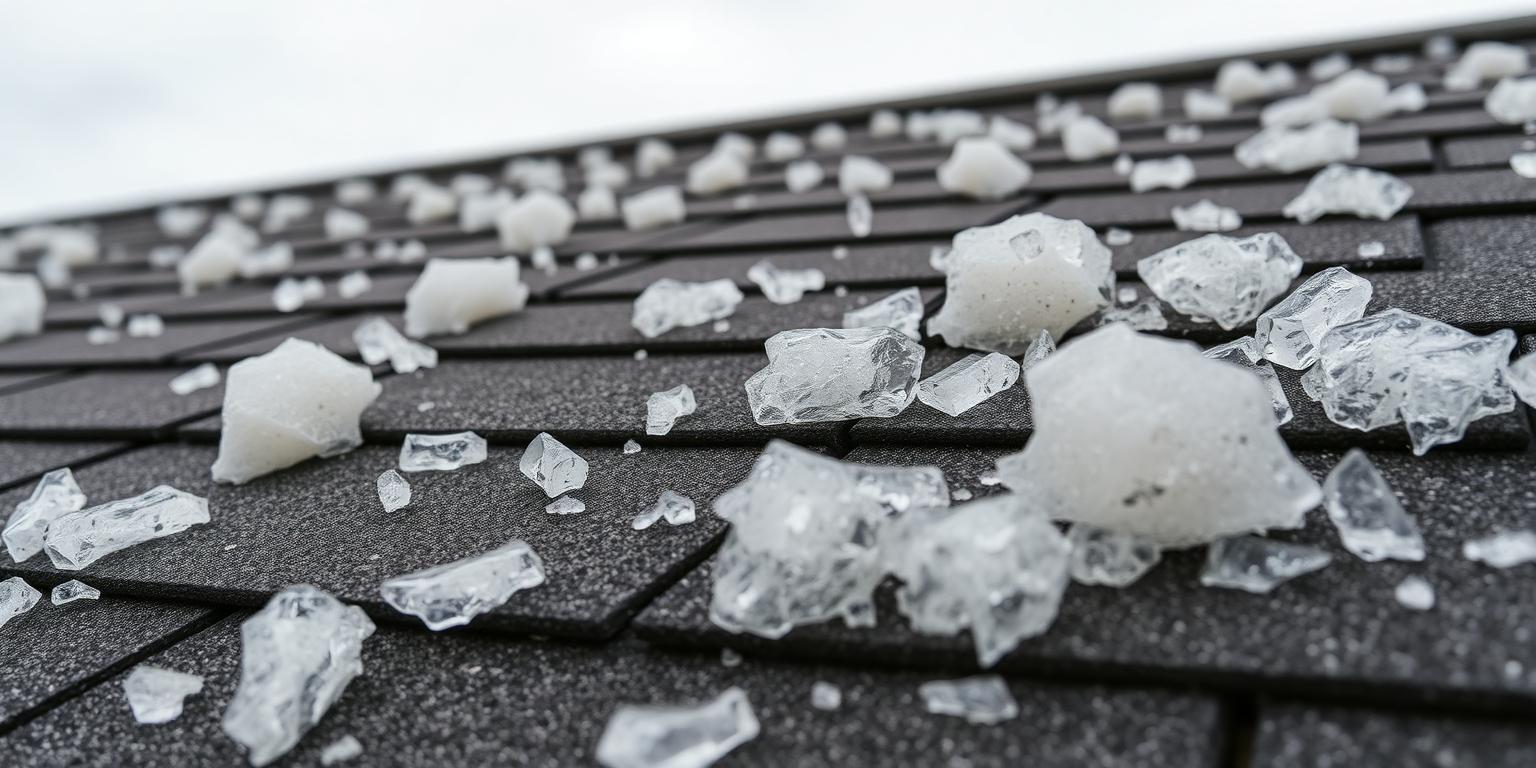
Illinois sits squarely in a hail corridor that stretches from Texas to the Great Lakes. Will County sees multiple significant hailstorms every spring and summer, with hailstones regularly reaching golf-ball size during severe supercell events. The frustrating part for homeowners is that hail damage to a roof often isn't visible from the ground — and it rarely causes an immediate leak. Instead, the granule loss and shingle bruising quietly shortens the life of your roof by years.
Knowing what to look for — and acting on it quickly — can be the difference between a fully covered insurance claim and paying for repairs out of pocket after your insurer says you filed too late.
Visible Signs of Hail Damage
The most reliable way to inspect your roof after a storm is to hire a licensed contractor who can safely walk the surface. But here's what they'll be looking for — and what you can check from the ground or a ladder at the eave level.
- Circular dents or 'bruises' on asphalt shingles — they look like a thumbprint pressed into the surface
- Missing granules in concentrated spots, often exposing the dark asphalt mat underneath
- Dents on soft metal surfaces: gutters, downspouts, drip edge, chimney caps, and HVAC covers
- Cracked or split shingles along an impact point
- Dented or punctured ridge cap shingles
- Granule buildup in gutters and downspout discharge points after the storm
What Hail Damage Does Over Time
Hail doesn't usually blow a hole in your roof immediately. What it does is fracture the bond between the shingle's granule coating and the asphalt mat. Those granules are what reflect UV rays and protect the asphalt from drying out. Once granules are gone from a spot, the underlying mat begins oxidizing rapidly — cracking, curling, and eventually allowing water infiltration.
In a climate like Mokena's, where temperatures swing from 90°F in July to -10°F in January, that accelerated degradation is magnified. A shingle that loses its granule protection in June may be actively leaking by the following February after repeated freeze-thaw expansion.
How to Document Damage for an Insurance Claim
If you suspect hail damage, document everything before any repairs are made. Take dated photos and video of your gutters, downspouts, window screens, outdoor A/C units, and the roof surface if safely accessible. These metal and screen surfaces act as a 'hail gauge' — if they're dented, your roof almost certainly took hits too.
Contact your insurance company within a reasonable timeframe. Most Illinois policies have a one-year window for storm damage claims, but some have stricter limits. Don't wait — and don't let an unvetted storm-chaser contractor pressure you into signing an assignment of benefits before your adjuster has visited.
The 10-Minute Ground-Level Hail Check (Mokena Edition)
You do not need to climb anything to get a strong signal about whether your roof took hits. Work this list the morning after a storm, while the evidence is fresh and dated photos still line up with the storm date on file with your insurer.
- Gutters and downspouts: run a hand along the top edge — hail dents show as shallow, random pockmarks, not straight ladder creases.
- Downspout discharge: look for a cone of shingle granules that looks like coarse black sand at the splash block.
- A/C condenser and grill covers: dented fins on the north or west face usually mean the same slopes on the roof were hit.
- Window screens, garage door panels, mailbox, and deck rails: soft metal and mesh act as a free hail gauge.
- Roof vents, chimney cap, and flashing visible from the ground with a phone zoom: dents in soft metal are the single most convincing item to an adjuster.
- Attic on the next dry day: look for pinpoint daylight or fresh water staining on the sheathing at the nail line.
- Note the storm date and hail size (Mokena's February 27, 2024 line produced widespread wind-driven hail) — claims are tied to a specific event.
Frequently Asked Questions About Hail Damage
Does hail damage always require full replacement? Not always. If the damage is limited to a small section, a partial replacement may be sufficient. However, if your roof is older than 15 years and has widespread granule loss, insurers often approve full replacement.
Can I file a claim for hail damage two years later? In Illinois, standard homeowner's policies generally require you to report storm damage within one year of the event, though the actual repair can happen later. Check your specific policy language.
Should I get on the roof myself? We don't recommend it unless you have proper footwear and safety equipment. A wet asphalt shingle is surprisingly slippery. Let a professional inspect it safely.
What Mokena Homeowners Should Do Next
If two or more items on that list check out, get a licensed contractor on the roof before the claim window narrows. A documented on-roof inspection with photos is what turns a suspicion into an approved claim, and it is also what prevents an unnecessary replacement when the damage is cosmetic.
After any significant hail event in Will County, Mokena Roofing Pros can connect you with a local contractor for a free post-storm inspection. Get matched today — our network contractors work directly with your insurance adjuster so you're not left navigating the claim alone.
Get Local Roofing Help
Get matched with trusted, licensed roofing professionals in Mokena and Will County.